Program
Program outline
| 08:00–09:00 | Registration |
|---|---|
| 09:00–09:15 | Opening and Introduction of the Plenary Lecture |
| 09:15–09:45 |
Plenary lecture — Prof. Zsuzsanna Helyes
Department of Pharmacology and Pharmacotherapy, Medical School,
University of Pécs, Pécs, Hungary
|
| 09:45–10:45 |
Round table / Career orientation workshop - from industry to academia
Including the plenary lecturer
|
| Moderator: Ákos Menyhárt (HUN-REN BRC) | |
| 10:45–11:30 | Informal networking |
| 11:30–13:00 |
Short presentations
6 presenters, 10 minute presentations + 5 minute questions
|
| Moderator: Fruzsina Walter (HUN-REN BRC) | |
| 13:00–14:00 |
Lunch
BRC canteen
|
| 14:00–15:30 |
Mini-poster sessions: “Poster whirlpool”
Posters are mixed every 30 min, in total 3 times
|
| 15:30–16:15 | Informal networking |
| 16:15–17:15 |
Lecture and discussion — Michelle Horváth
Junior research fellow, Centre for Social Sciences, Eötvös Loránd University, Budapest:
„Being a young researcher in today’s Hungary: challenges, satisfaction, mental health and
well-being" — Findings from the joint survey of the Hungarian Academy of Sciences (MTA) and
the Hungarian Young Academy (FKA) in 2025
|
| Moderator: Szilvia Veszelka (HUN-REN BRC) | |
| 17:15 | Closing remarks |
| 18:30 | Social program |
Lecturers and round table discussion
Lecturers

Zsuzsanna Helyes is a full professor of pharmacology at the Department of Pharmacology and Pharmacotherapy, Medical School, University of Pécs, Hungary, and a Corresponding Member of the Hungarian Academy of Sciences.
Her research focuses on neuropharmacology, particularly the role of capsaicin-sensitive sensory nerves and neurovascular–immune interactions in inflammation and pain, both in the peripheral and central nervous systems. Her work also explores the relationship between these mechanisms and psychological conditions, including anxiety and depression, with the aim of identifying novel therapeutic targets for analgesic, anti-inflammatory and antidepressant drug development.
Professor Helyes is an internationally recognized researcher, author of numerous scientific publications and inventor on several patents. She is also deeply committed to mentoring the next generation of scientists, having supervised more than 20 successfully defended PhD theses. Her scientific achievements have been recognised with numerous prestigious awards, including the Hungarian Academy of Sciences' Academic Award and the Szentágothai Prize.

Michelle Horváth is a junior research fellow at the Institute for Computational Social Science within the Centre for Social Sciences, and is currently a doctoral student at the Doctoral School of Sociology at Eötvös Loránd University (ELTE). She completed her undergraduate studies in International Business at Corvinus University of Budapest, followed by a Master's degree in Survey Statistics and Data Analytics at ELTE. Her main research interests focus on social stratification in the digital space. In 2025, she co-authored the study titled „The Situation of Researchers in Hungary and Connected to the Country: Key findings of the MTA-FKA 2025 Survey.
Round table discusson
Zsuzsanna Helyes is a full professor of pharmacology at the Department of Pharmacology and Pharmacotherapy, Medical School, University of Pécs, Hungary, and a Corresponding Member of the Hungarian Academy of Sciences.
Her research focuses on neuropharmacology, particularly the role of capsaicin-sensitive sensory nerves and neurovascular–immune interactions in inflammation and pain, both in the peripheral and central nervous systems. Her work also explores the relationship between these mechanisms and psychological conditions, including anxiety and depression, with the aim of identifying novel therapeutic targets for analgesic, anti-inflammatory and antidepressant drug development.
Professor Helyes is an internationally recognized researcher, author of numerous scientific publications and inventor on several patents. She is also deeply committed to mentoring the next generation of scientists, having supervised more than 20 successfully defended PhD theses. Her scientific achievements have been recognised with numerous prestigious awards, including the Hungarian Academy of Sciences' Academic Award and the Szentágothai Prize.

Dr. Emese Kis is Scientific Director at SOLVO Biotechnology, a Charles River company based in Szeged, Hungary, where she has built a career spanning more than two decades in the biotechnology industry. Before this position she also was the Head of the In Vitro Laboratory and Head of the Production Laboratory.
Her professional expertise focuses on drug transporter research and the development of in vitro experimental systems for investigating drug disposition, transporter function and drug-drug interactions. Her work contributes to the development and application of specialised in vitro technologies supporting pharmaceutical research and drug development.
She obtained her PhD in Biology from the University of Szeged (2008), following a Master's degree in Chemical Technology and Biotechnology from Budapest University of Technology and Economics (2002).
Her career provides an excellent example of how scientific expertise can be translated into industrial innovation and leadership, bridging fundamental research and pharmaceutical development.

Dr. Márton Rózsa is a neuroscientist at the HUN-REN Institute of Experimental Medicine (KOKI), Budapest, Hungary, where he leads research on neuronal diversity and cortical circuit function. His research investigates how distinct types of inhibitory neurons shape neuronal network activity and influence behaviour.
After obtaining his PhD at the University of Szeged in 2018, he spent approximately six years in the United States, first as a postdoctoral researcher at the Janelia Research Campus of the Howard Hughes Medical Institute (2019–2021), followed by research at the Allen Institute for Neural Dynamics in Seattle (2022–2025). His scientific achievements have been recognised with the János Bolyai Research Scholarship (2025) and an EMBO Installation Grant (2026), supporting the establishment of his independent research group.
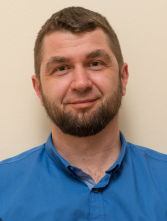
Dr. Gábor Molnár is a Senior Researcher at the Department of Physiology, Anatomy and Neuroscience, Faculty of Science and Informatics, University of Szeged, Hungary, and a member of the MTA-SZTE Research Group for Cortical Neuronal Networks.
His research focuses on the cellular and synaptic mechanisms underlying the function of neuronal networks in the cerebral cortex, with particular emphasis on the diversity and physiological properties of cortical neurons. His work contributes to a better understanding of the organisation and functioning of the human cerebral cortex, combining experimental approaches to investigate neuronal and synaptic activity.
He obtained his PhD in 2005 and has been a member of the research community at the University of Szeged since 2004. Since 2007, he has held a senior research position within the MTA–SZTE research group. His scientific achievements have been recognised with the Academic Youth Award (2009) and the János Bolyai Research Scholarship.